

Event Staff Safety 101: Why Temporary Workforces Need Permanent Safety Infrastructure
by Linaeya Horn-Muller, on Aug 10, 2026, 8:44:59 AM
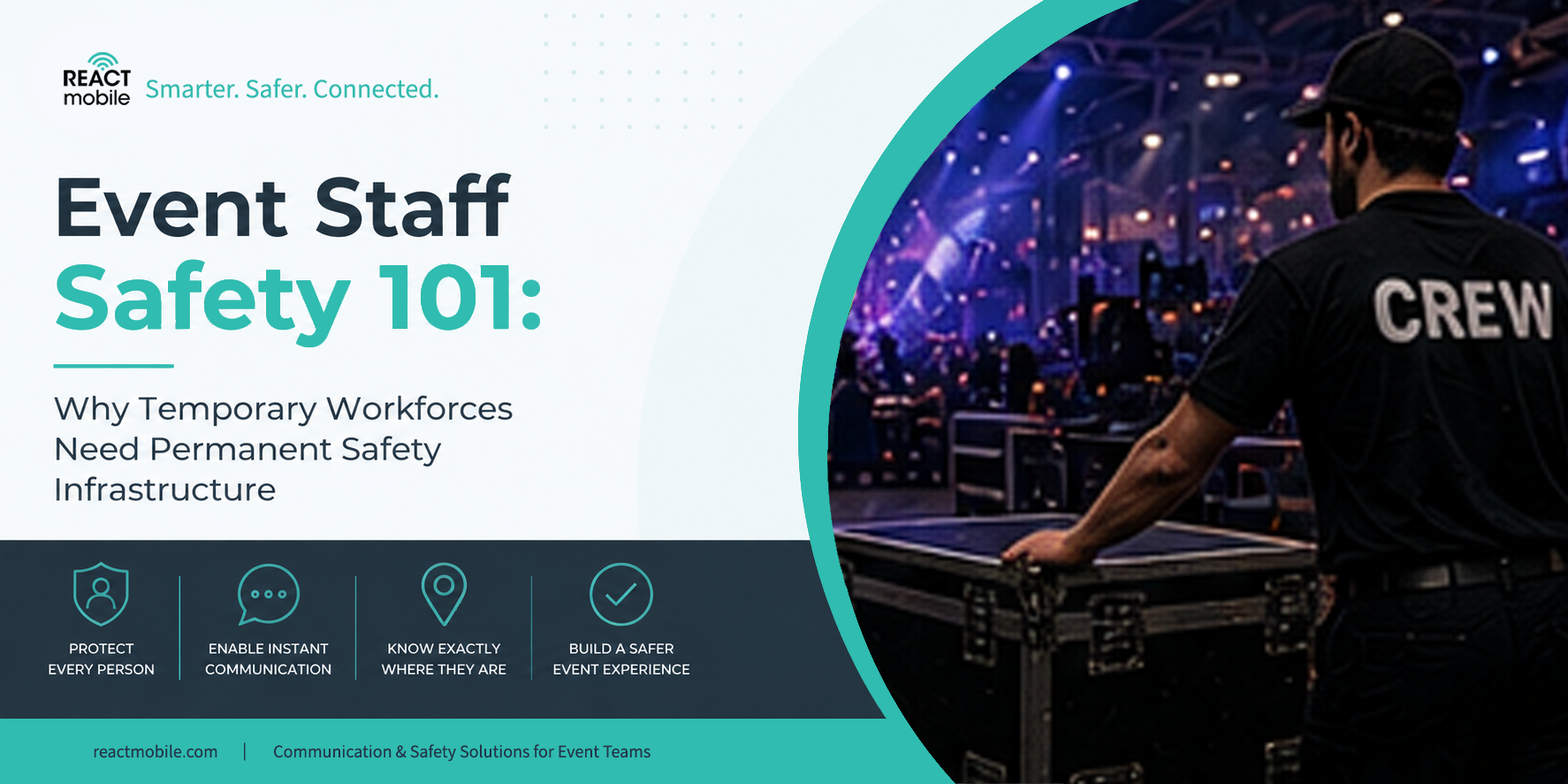
Summer means festivals, conventions, concerts, and outdoor events drawing thousands of attendees to venues that were often quiet parking lots and fairgrounds just weeks earlier. Behind every one of those events is a workforce that looks nothing like a typical office: seasonal hires, day-of contractors, vendors, and part-time security, many of whom have never worked the site before and won't work it again after the event ends.
That temporary nature is exactly what makes event staff safety so easy to overlook, and so important to get right.
The Staffing Problem Behind the Safety Problem
Permanent venues build safety habits over time. Staff learn the building, know where exits are, and recognize their coworkers and supervisors. Event workforces don't have that luxury. A stagehand or ticket-taker hired for a three-day festival may be working an unfamiliar site, reporting to a supervisor they met that morning, with no radio and no clear escalation path if something goes wrong.
Add in large crowds, alcohol service, outdoor terrain, and temporary structures, and the risk profile looks very different from a typical fixed workplace, even though the workers themselves may not be trained or equipped any differently.
The 2021 Astroworld Festival crowd crush in Houston is a hard illustration of that escalation gap. Investigations afterward found that some security and event staff on the ground recognized the crowd surge as dangerous well before it was declared a mass casualty event, but there was no clear, fast channel for that alarm to reach the people who could stop the show or redirect the crowd. Ten attendees died and hundreds more were injured. The tragedy is now cited across the events industry as a case study in why on-site staff, not just command staff, need a direct, immediate way to raise the alarm.
What Temporary Doesn't Mean
Temporary staffing should not mean temporary safety standards. Event organizers are still responsible for the people working their site, whether they're on payroll for a season or a single weekend. That responsibility does not shrink because the assignment is short.
The challenge is finding safety infrastructure that can be deployed as fast as the event itself comes together. A system that requires weeks of installation or extensive staff training does not fit an environment where the workforce changes shift to shift.
Building Safety That Travels with the Event
Wearable panic buttons and mobile safety devices solve this by giving every worker, regardless of tenure, a way to call for help the moment they need it. No app download, no memorizing a building layout. A quick activation instantly notifies on-site security or event management with the worker's location, so response teams can act immediately instead of trying to track down which vendor booth or stage area the call is coming from.
For events spread across large outdoor footprints, location accuracy become especially important. A worker calling for help from a back parking lot or a remote vendor area needs responders to know exactly where to go, not just that something happened somewhere on site.
Two-way voice capability adds another layer, allowing a worker to describe what's happening in real time, which matters when event staff are dealing with everything from medical incidents to unruly attendees to structural issues on temporary builds.
Two Workforces, One Communication Layer
Permanent staff and temporary event staff need different things from a safety device, and the same technology can cover both.
For permanent staff who work events year-round, the biggest daily win is coordination. Two-way voice replaces the patchwork of radios, texts, and shouted instructions that usually holds an event together. A venue manager can reach a specific team directly instead of broadcasting on a channel everyone has to filter through. Setup crews can flag a delay, security can redirect coverage to a crowded entrance, and operations can move faster because the message goes straight to those who need it. This isn't a safety feature so much as a better way to run the event, and it saves real time across a multi-day production.
For temporary and seasonal staff, that same coordination benefit matters, but safety is the bigger gap to close. These are workers with the least familiarity with the site and the least established relationship with a supervisor. Giving them the same device solves two problems at once: they get an instant way to call for help if something goes wrong, and they get folded into the same communication system as permanent staff instead of being left to figure out who to flag down. A seasonal ticket-taker with a device that works exactly like the one worn by the full-time operations lead is no longer operating on a separate, weaker safety tier.
Standardizing on one device for both groups also simplifies training. Nobody has to learn a different system depending on whether they're on payroll for a year or a weekend. Everyone presses the same button and talks into the same channel, which means safety coverage doesn't quietly shrink for the workers who need it explained the fastest.
Making It Part of the Plan, Not an Afterthought
The events and venues industry runs on tight timelines and rotating crews, but that doesn't mean safety has to be reinvented for every event. Deployable, easy-to-use safety and communication technology can become a standard part of the event staffing plan, the same way security briefings and credential checks already are.
Planning your next event's safety strategy? Schedule a demo to see how React Mobile equips temporary and seasonal workforces with real-time safety coverage.